Finland has a long history of being squeezed between its two larger neighbours, Sweden and latterly Russia. After the Finnish War in 1809, Finland was ceded to the Russian Empire, making this area the autonomous Grand Duchy of Finland. Indepenence was declared in 1917
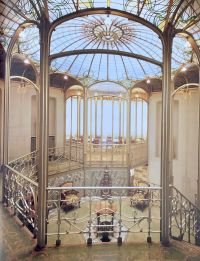
As was the case in much of the rest of Europe growth and prosperity was rapid at the end of the 19th century providing the drive and the money to rebuild. About 600 buildings date back to the Art Nouveau era, ca. 1895-1915. Large residential areas were constructed entirely in Jugend style. The Katajanokka district with its wide city quarters full of fantastic Art Nouveau buildings is unique in the world. Other neighbourhoods that are particularly rich in Art Nouveau houses are Kruununhaka, Ullanlinna and Eira.


A feature of Finnish, Jugendstil architecture is the ‘plinth’ at the base of the buildings. It is not clear if this is stylistic, structural or related to snow management.. Usually the construct is of local granite but not always.


Further Reading: