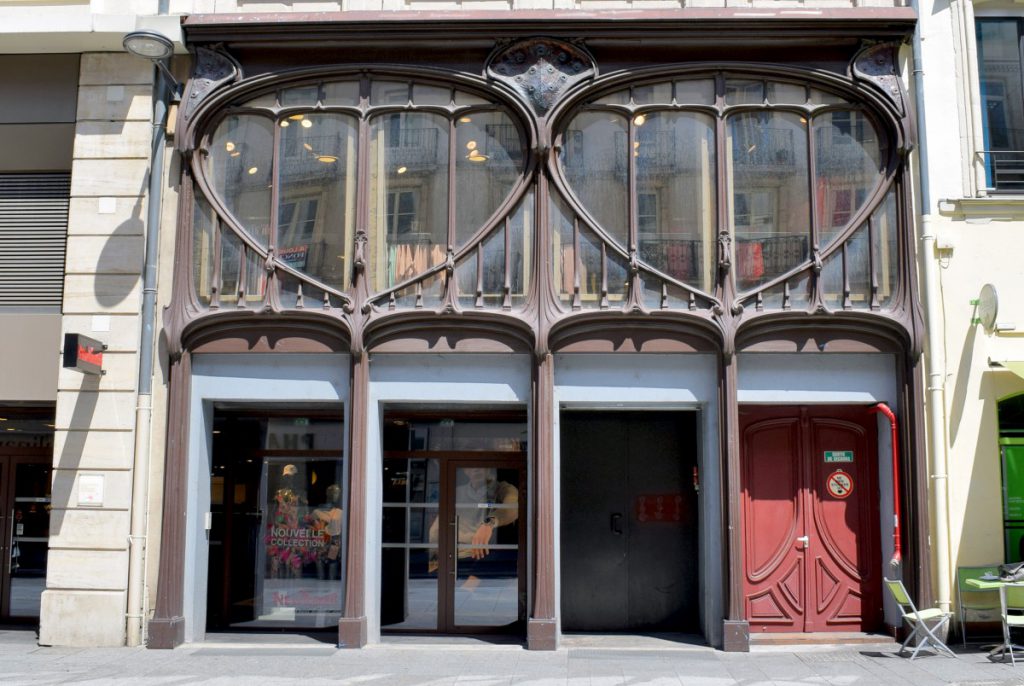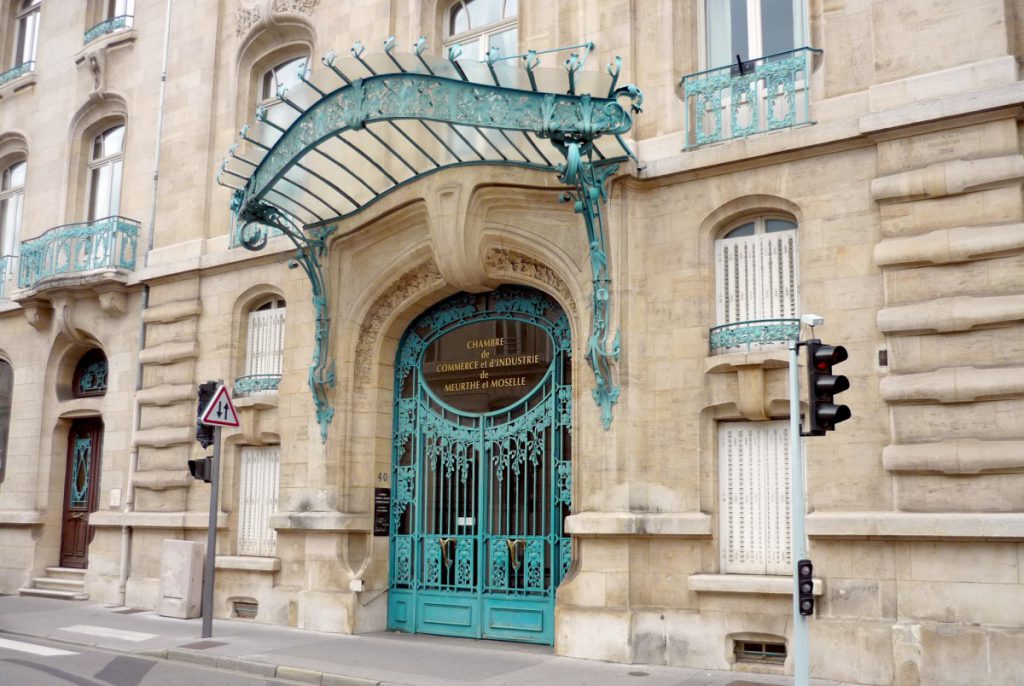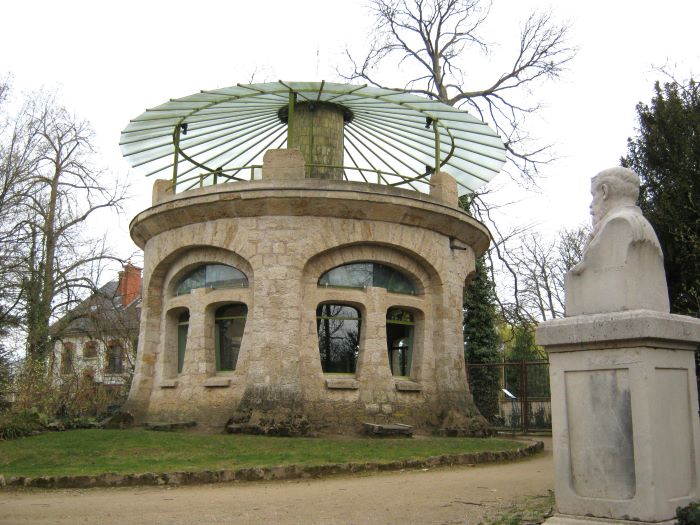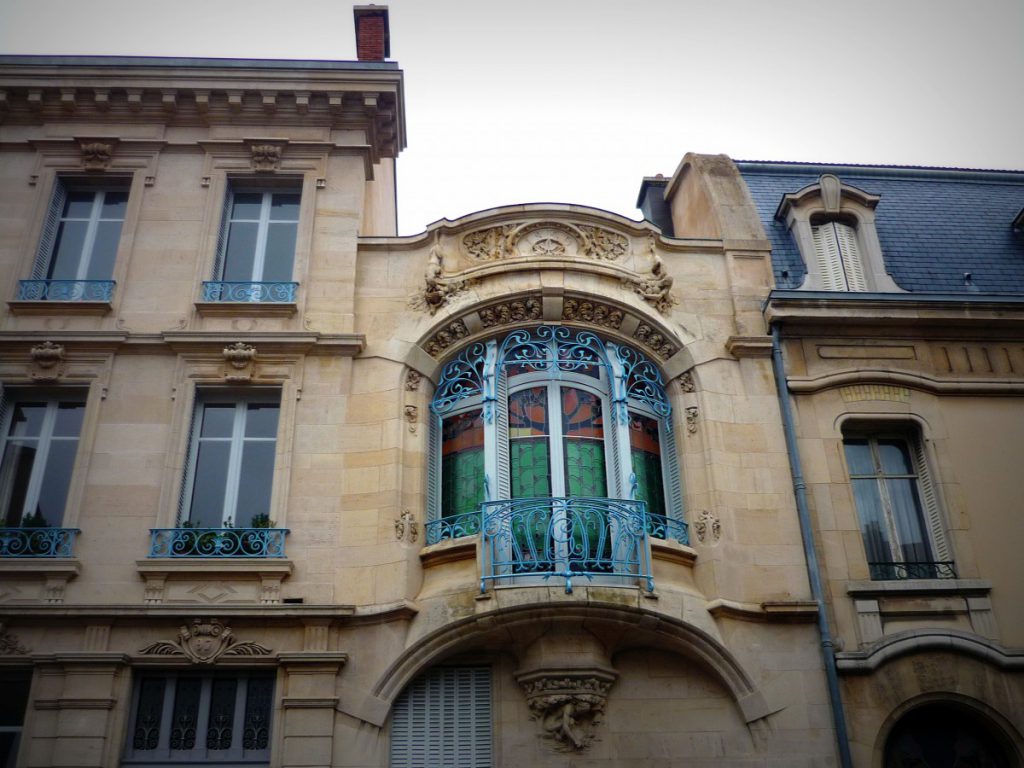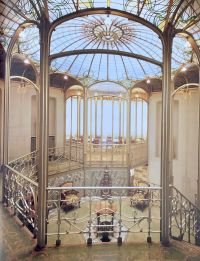
Around 1900, Nancy became famous the world over for its art nouveau movement, founded by a group of outstanding artists. Known as the Ecole de Nancy (Nancy School), these artists brought together the decorative arts and industrial production, and this extraordinary creative adventure propelled Nancy into the limelight on the modern world stage. Under the impetus of Emile Gallé, a whole generation of artists took their inspiration from plant forms and the world of science to create new designs in architecture and the decorative arts. The immense talent of the artists of the Nancy School can be seen in their glassware, ceramics, furniture, wrought ironwork, bookbinding, stained glass, sculpture and in the architecture of houses, banks and shops.
A very good source of information about all of Nancy’s most important Art Nouveau buildings may be found by following the link below.
Villa Majorelle
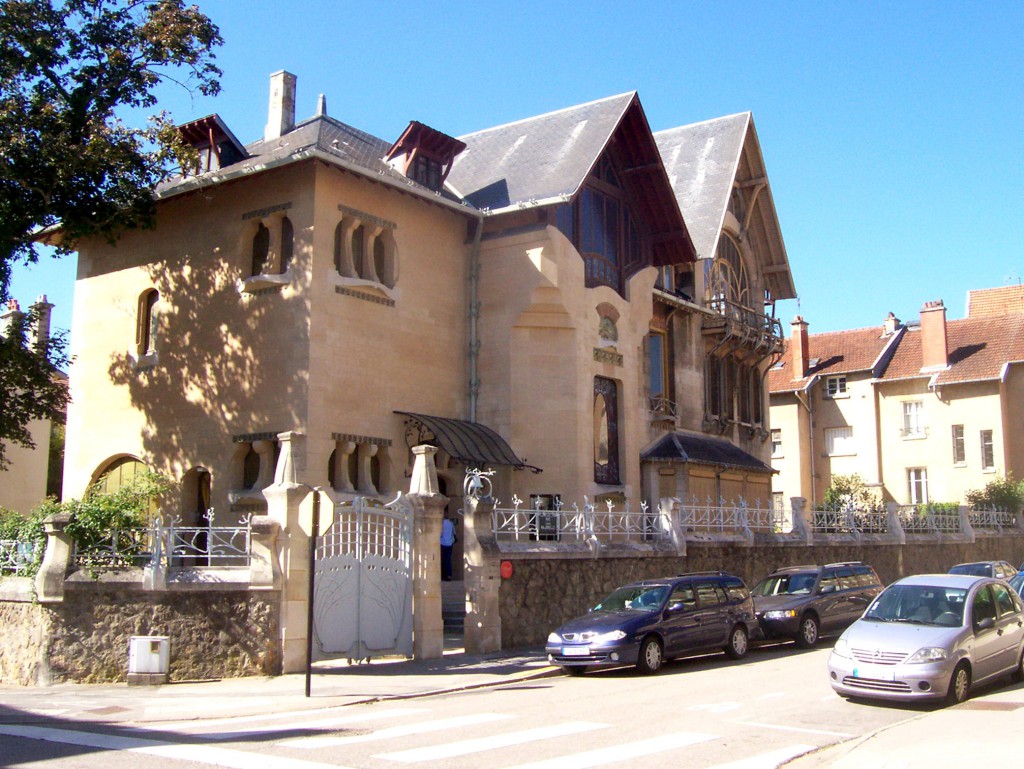
The Villa Majorelle is probably the most well known of Nancy’s Art Nouveau buildings. It is located at 1 rue Louis-Majorielle in the city of Nancy, France, it was the home and studio of the furniture designer Louis Majorelle. It was designed and built by the architect Henri Sauvage in 1901-1902. The villa is one of the first and most influential examples of the Art Nouveau architectural style in France. It served as a showcase for Majorelle’s furniture and the work of other noted decorative artists of the period, including ceramist Alexandre Bigot and stained glass artist Jacques Gruber. It is now owned by the city of Nancy, and is open to the public certain days for tours by reservation.
Further information and images of the Villa Marjorelle and Henri Sauvage’s other work can be found via the link below.
Other Nancy Art Nouveau Buildings