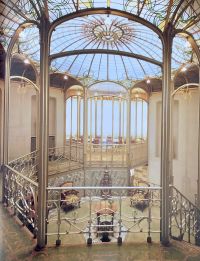
The story of Art Nouveau architecture is largely a Eurocentric one. Victor Horta is usually credited with designing the first full art nouveau house, Hotel Tassel in Brussels 1892-1892. Remarkably, given the limitations of communication and transport, within a decade, the style had been taken up and developed by designer architects throughout Europe and beyond. Wherever there was European influence and money there are Art Nouveau buildings. The enormous wealth generated at the end of the 19th century facilitated the expression of new styles breaking away from the classical styles of the past.
While producing buildings recognisable as Art Nouveau, each country and its architects developed their own version, influenced by local tastes and fashions. Gaudi and Mackintosh both designed Art Nouveau buildings but their styles are very different.
The Art Nouveau period was, however, shortlived becoming old fashioned and starved of capital by the First World War. Argentina having avoided the war pursued Art Nouveau for a little longer, building continued up to 1920.
Listed are locations where interesting Art Nouveau buildings are relatively common. The list is not comprehensive. There are other places! Locations highlighted in blue are a link to pages with further information, either within this site or elsewhere.
ARGENTINA
- – ROSARIO
AUSTRIA
BELGIUM
- – BRUXELLES
CZECH REPUBLIC
- – PRAHA
- – NORTHERN BOHEMIA
FINLAND
FRANCE
- – PARIS
- – STRASBOURG
GERMANY
- – WEIMAR
HUNGARY
ITALY
- – TORINO
- – MILANO
LATVIA
- – RIGA
NORWAY
- – ALESHUND
RUSSIA
SLOVAKIA
- – BRATISLAVA
SPAIN
- – BARCELONA
- – LAS PALMAS
THE NETHERLANDS
- – DEN HAAG
U.K.
U.S.
Further Reading:
Simply putting into a search engine ‘art nouveau architecture’ followed by the location of interest will bring up a wealth of information and images. A web site which pulls a lot of Art Nouveau information together is Frank Derville’s excellent